2024年6月「Life Stories」ギャラリー犬養(札幌)

■Satement
Yuko Furukawa solo exhibition 「Life Stories」
この度は拙個展にお越しいただき誠にありがとうございます。制作を始めて15年が経ちました。誰かの手に渡るのなら、生きているみたいに生命力や存在感があって、手にする人に元気をもたらすものが良いなという思いを持ち続けて制作してきました。
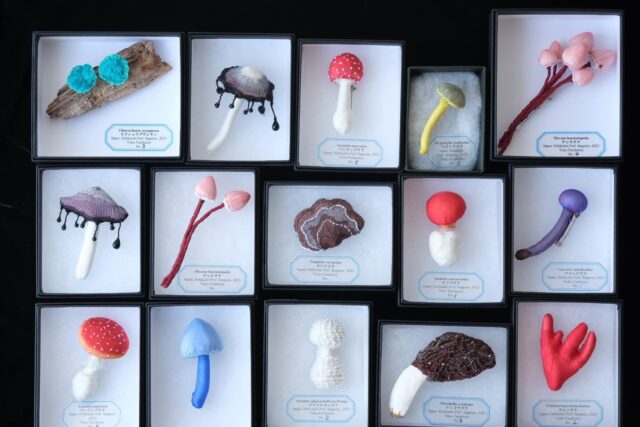
数年前からは標本のシリーズに着手、世界にはまだまだ知らない素晴らしい生き物がいることを知り創作意欲が膨らみました。昨年は森でのきのこ観察を教わってきのこのシリーズを制作。でも、せっかく生きているみたいに作ったきのこを標本の形で並べた時に違和感を持ちました。それは、せっかく誕生させたものを殺さなければいけない悲しみであり、例えるなら自分自身を標本にされる感覚であり、科学や理屈では割り切れない感情なのだと分かりました。
生きている物だけが持つ存在感を表現するため、私は何度も針をさして作品に足跡をつけるようにして制作します。ひと針ひと針刺しながら心寄せていくと、作る生き物そのものになってしまうような感覚があります。作り終えた作品はあっさり手放せるのですが、どうやらこの感覚が、作品を標本の形に収めることに抵抗しているようなのです。
調べてみると、他の生き物になってしまう感覚というのは、実は世界各地のさまざまな民族の宗教や風習に見られるアニミズム信仰ではごく当たり前にあった感覚なのだと知りました。花を見ては花になり、小さな虫を見ては虫になり、空高く飛ぶ鳥を見ては鳥になり、人々は自然から力を得て日々の暮らしへ戻っていったのだそうです。また、禅で体得する「無住心」も心を相手に投げ入れ相手と一体になることとされており、西田幾多郎も「自他合一」を説いています。
私は悟った人間ではありませんが、子育てをし、生き物観察をしながら制作してきたことでこの辺りの感覚に少し近づいていたのかもしれません。そんな経緯から今回、生き物の見方を捉え直し、生きたまま表現できる俳句のシリーズを制作しました。
とはいえ、標本そのものを否定している訳ではありません。標本はその生物の存在を証明し、その特徴を明らかにするための大事な証拠であり、地球上に約175万種の生物がいることを知らしめたのも分類学の功績だと思います。
また、現代は人新世とも言われ、人間活動が自然界に大きな影響を与えていることも明らかです。生き物は人間を癒してくれるためだけに存在する訳ではないと考え、今を生きる生き物のシリーズも制作しました。
以上の理由で、今回は3つの章に分けて作品を展示しています。それは日本の辿った歴史とも関係した生き物達の物語でもあります。
2024年5月19日 Yuko Furukawa
Yuko Furukawa solo exhibition “Life Stories”
Thank you very much for visiting my solo exhibition. It’s been 15 years since I started creating art works. I have always believed that if my works are going to be in someone’s hands, it should be something that has vitality and presence, as if it were alive, and that brings energy to the person who holds it.
A few years ago, I started a series of specimens, and my creative desire grew as I learned that there are many wonderful creatures in the world that I still don’t know about. Last year, I created a mushroom series after learning how to observe mushrooms in the forest. However, when I arranged the mushrooms that I had made to look like they were alive in the form of specimens, I felt something strange about them. I realized that it was the sadness of having to kill something that had been created, or the feeling of being made into a specimen, a feeling that cannot be explained by science or logic.
By the way, in order to express the presence that only living things have, I insert the needle and thread over and over again. It’s as if I’m leaving my footprints on my work. When I attach my heart to a living creature and create a work with thread and needle, I feel like I am becoming that creature. I can easily let go of the finished work. However, this feeling seems to resist placing my works in the form of specimens.
When I researched the feeling of becoming things, I knew that it was actually a common sense in animistic beliefs found in the religions and customs of various ethnic groups around the world. When people saw a flower, they became a flower, when they saw a small insect, they became an insect, and when they saw a bird flying high in the sky, they became a bird. And it seems that people gained strength from nature and returned to their daily lives.
Additionally, the “Mujyu-shin; non-housing mind”, which is one of the things one learns in Zen meditation, and the “unity of self and other”, by Japanese philosopher Kitaro Nishida also mean becoming one with others.
I’m not an enlightened person, but I think I get closer to that feeling by creating art works. For this reason, I reconsidered the way I look at living things. I then created a series with haiku poems that express living things without killing them.
However, I am not denying the specimen itself. Specimens are important evidence for proving the existence of an organism and clarifying its characteristics, and I believe that the discovery that there are approximately 1.75 million species of organisms on Earth is an achievement of taxonomy.
Furthermore, the present era is also referred to as the “Anthropocene”, and it is clear that human activities are having a major impact on the natural world. Believing that living things do not exist solely to comfort humans, I have also created a series of living creatures that live in the present.
For the above reasons, this solo exhibition is divided into three chapters. They are also the life stories that are related to the history of Japan.
May 19, 2024
Yuko Furukawa
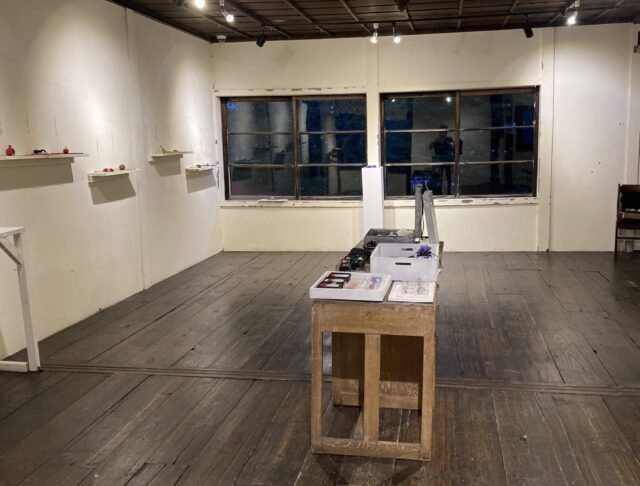
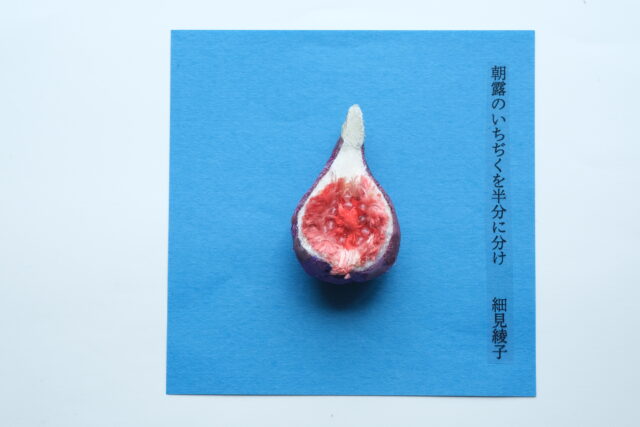
【第1章 俳句】
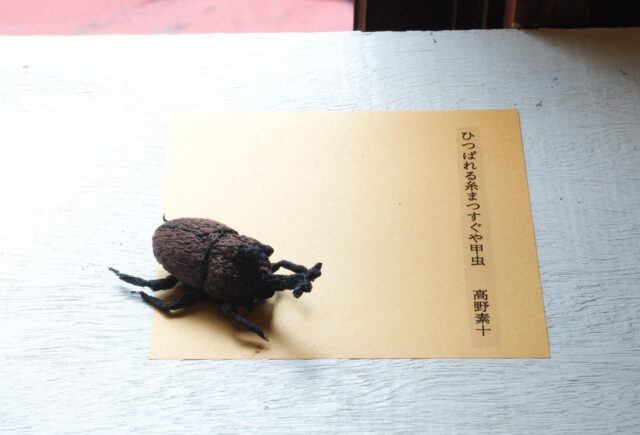
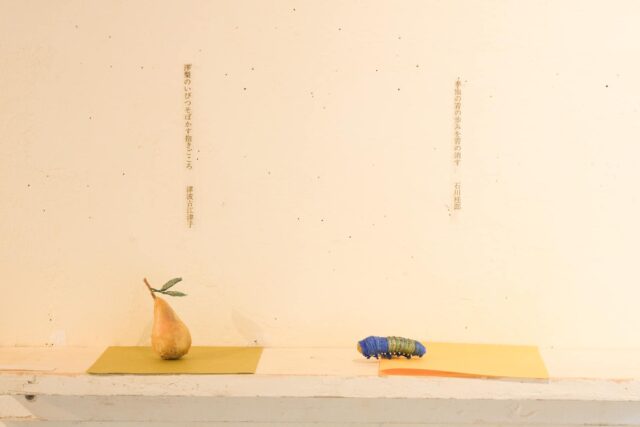
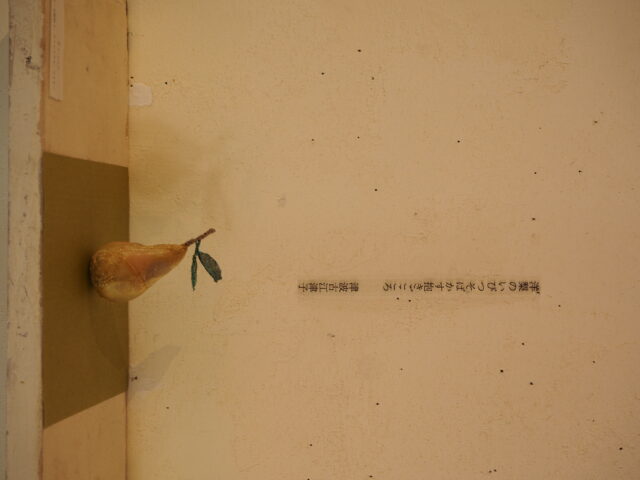
俳句は江戸時代の松尾芭蕉、与謝蕪村、小林一茶といった天才俳人たちによる「俳諧の発句」から始まり、明治時代に正岡子規によって確立されました。
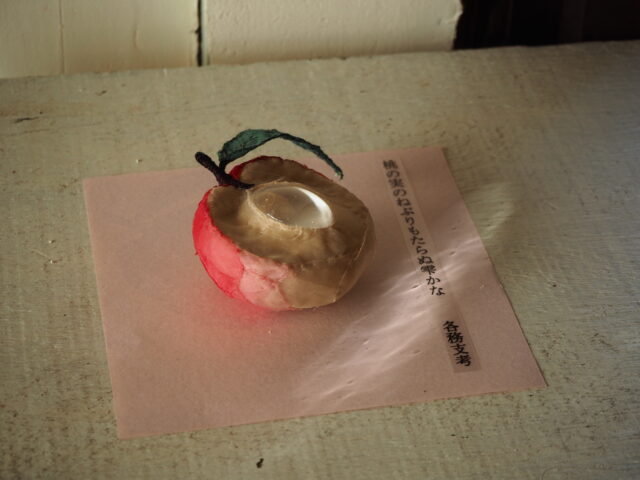
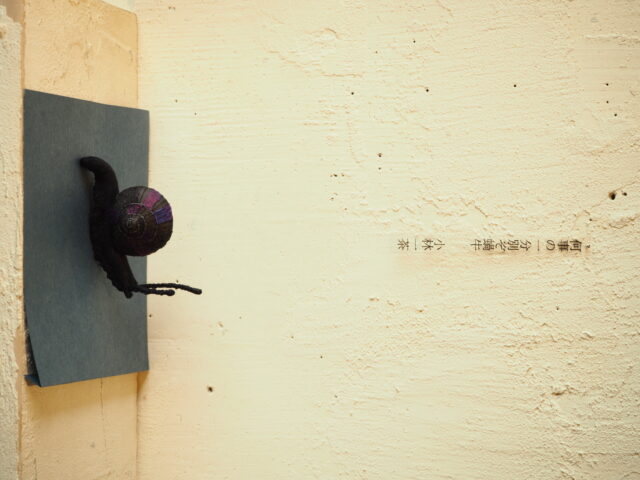
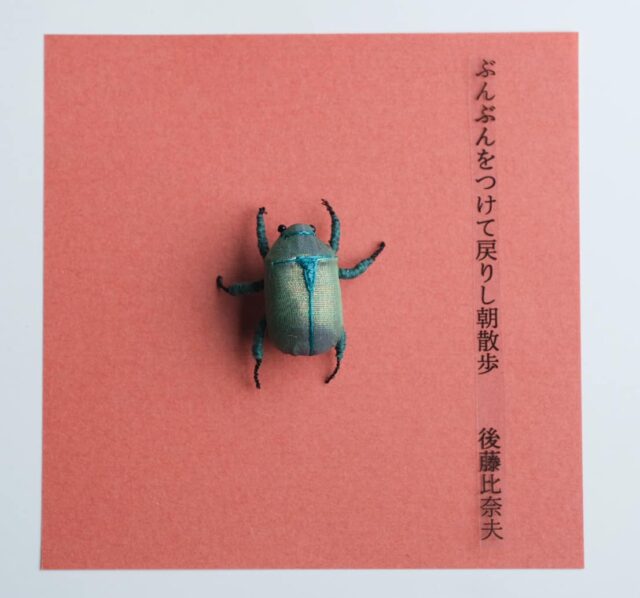
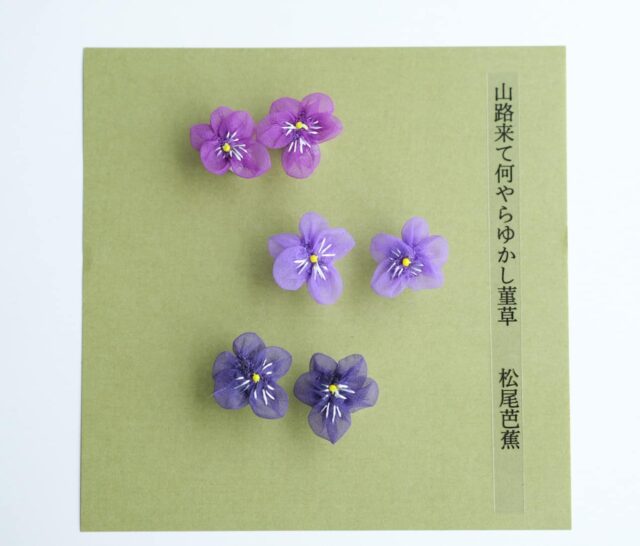
生き物についての表現をあれこれ模索していた時、松尾芭蕉の俳句をあらためて読み衝撃を受けました。目の前の生き物を殺すことなく短い文字のつながりだけで、生き物を読む人の心の中で永遠に生かし続けることができるのだと。そこで今回、俳句のシリーズを新たに取り入れることにしました。
俳句の世界では、季節に沿った季語があり、生き物と生き物でないものの線引きもなく、生き物の分類も分類学とは異なります。タニシや亀が恋をして鳴き、月や雨、皿の上の小魚も、害虫である虫にも同様に想いを寄せた様々な句があります。俳句の背景にはアニミズムの思想があり、地上で人間だけが唯一の主ではないとするところに共感を覚えました。今回、俳句から着想した生き物を新たに制作し、過去作品を再構成して展示しています。
【Chapter 1 Haiku】
Haiku began with the “hakku of haikai” by genius haiku poets such as Matsuo Basho, Yosa Buson, and Kobayashi Issa in the Edo period, and was established by Masaoka Shiki in the Meiji period.
When I was looking for ways to express living things, I read Matsuo Basho’s haiku again and was shocked. Rather than killing the creatures in front of us, we can keep them alive forever in the hearts of the readers just by connecting them with short letters. Therefore, this time, I decided to introduce a new art work series with haiku poems.
In the world of haiku, there are seasonal words, there is no delineation between living things and non-living things, and the classification of living things is different from taxonomy. There are various poems about snails and turtles crying out in love, about the moon and the rain, about small fish on a plate, and about pest insects as well. The background of haiku is the idea of animism, and I felt sympathy for the idea that humans are not the only masters on earth. This time, I am exhibiting new creatures inspired by haiku and reconstructed past works.
【第2章 標本】
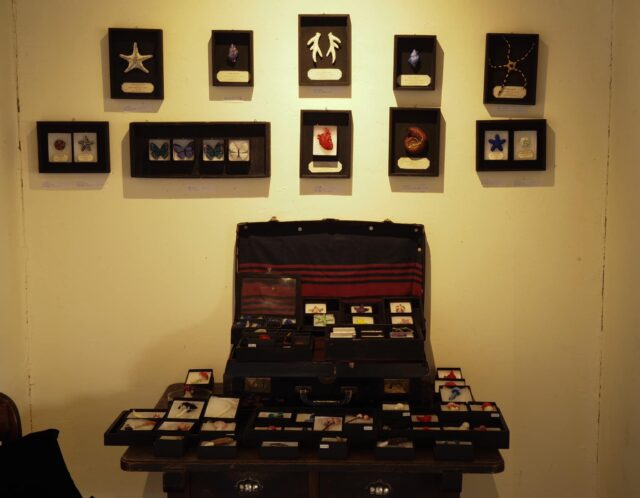
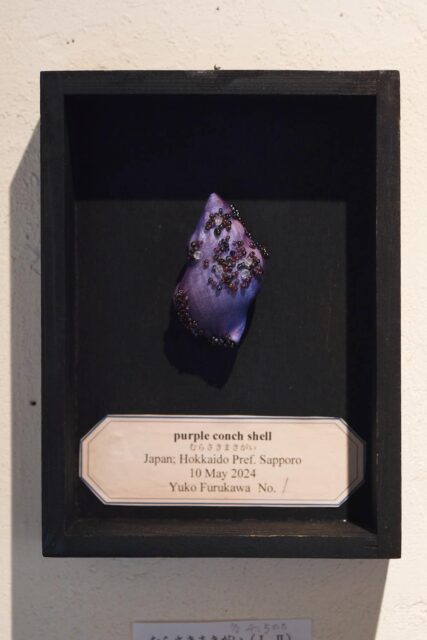
標本とは、その生物の存在を証明しその特徴を明らかにするための大切な証拠です。
その歴史は大変古く、古代ギリシアでは紀元前4世紀アリストテレスの「動物誌」が記載されて標本の始祖となり、中国でも紀元前800年ごろから薬草の特徴などを記載する「本草学」が、古代ローマでは紀元前750年にプリニウスによる「博物誌」が記載されています。
大航海時代、世界各地で新種の動物・植物・鉱物の発見が相次ぎ、それらの分類のために博物学が発展しました。東南アジアからはヨーロッパへ大量の蝶類の標本が持ち帰られました。日本においては鎖国を行なっていた江戸時代に、シーボルトが日本で収集した大量の標本をオランダに持ち帰りました。
標本は生物の命を活用させてもらうことにより研究や教育など、私たちに多くの学びを与えてくれる知的財産となる一方で、蒐集対象としてコレクターの物欲を満たす目的でも多く制作されてきました。
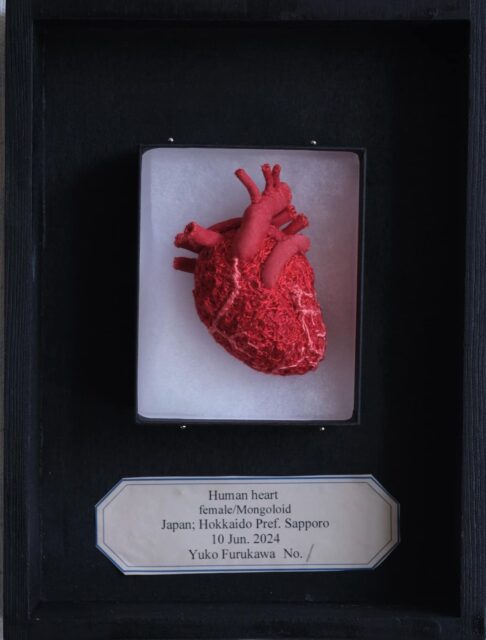
標本は、人間を世界の中心に据えて生物の姿を捉えるものです。そのため、しばしば人間もまた生物であるという視点を忘れがちのようにも思えます。生き物そのものになってしまう感覚で作品を制作する私としては、今回あえてヒトの心臓標本も展示することにしました。それは科学では割り切れない私の胸の痛みでもあり、生命を捧げた生物たちの痛みでもあります。
【Chapter 2 Specimens】
Specimens are important evidence for proving the existence of an organism and clarifying its characteristics.
Its history is very old. In ancient Greece, in Aristotle ”Zoology” was written in the 4th century BC, which became the origin of specimens. In China, herbalism, which describes the characteristics of medicinal herbs, began around 800 BC. In ancient Rome, It was written in Gaius Plinius Secundus ”Naturalis historia” in 750.
During the Age of Discovery, new species of animals, plants, and minerals were discovered one after another around the world, and natural history developed to classify them. A large number of butterfly specimens were brought back to Europe from Southeast Asia. During the Edo period, when Japan was isolated from the rest of the world, Philipp Franz Balthasar von Siebold brought back a large number of specimens he had collected in Japan to the Netherlands. Specimens become intellectual property that can teach us a lot in research and education by utilizing the lives of living things, but they are also often produced to satisfy the material desires of collectors.
The concept of specimens puts humans at the center of the world and captures living things. I think that’s why we often forget that humans are living creatures too. I create works with the feeling of becoming a living thing, so this time I purposely exhibited a human heart specimen. It expresses the pain in my heart that cannot be divided by science, and the pain of the living creatures who gave their lives.
【第3章 今を生きる】
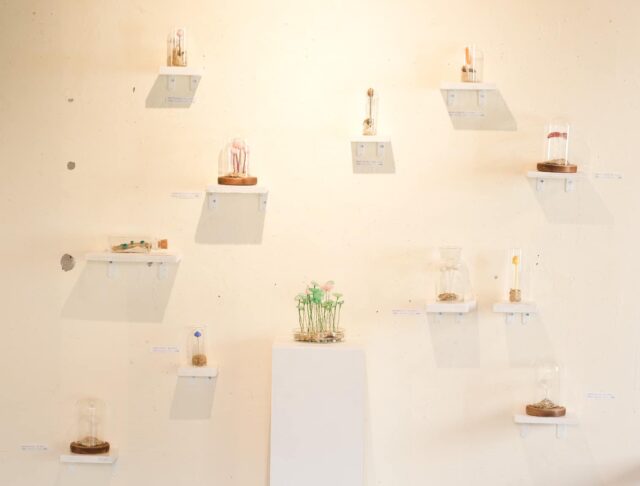
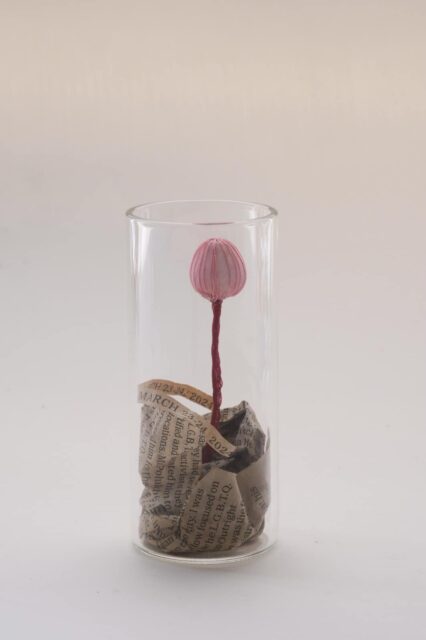
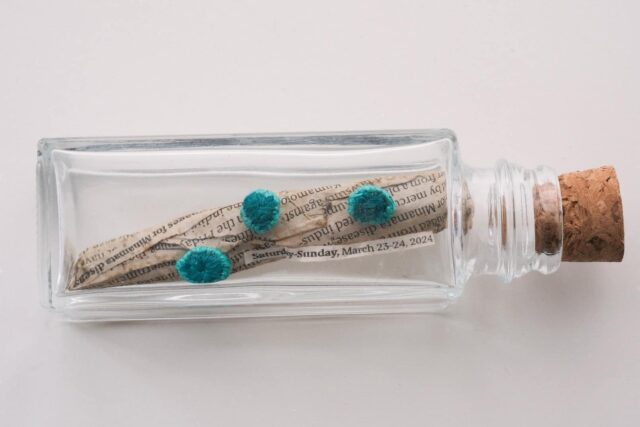
現代は、人類の経済活動や核の取り扱いによって環境変化が大きくなり、自然のシステムさえも変えてしまった人新世にあると言われています。しかしながら、地球では戦争や環境破壊が起こり続け、人間界では富や権力の奪い合いなどが日常茶飯事となっています。美しい生き物たちはどこか美しい場所で生きて私たちを癒してくれるものなのではなく、私たちの日常と時間も空間も繋がって、その生を純粋に全うしていくものなのではないかと考えます。
この展示では、今もどこかで懸命生きている小さくて純粋な生命を思って制作しました。
【Chapter 3 Living Now】
It is said that we are now in the Anthropocene, where human economic activities and nuclear tests have caused major environmental changes and even changed natural systems. However, wars and environmental destruction continue to occur on Earth, and in the human world, competition for wealth and power has become a daily occurrence. I believe that beautiful creatures do not just live in some beautiful place and heal us, but rather that they are connected to our daily lives in time and space, and live purely. I created these art works thinking about the small, pure lives that are still living hard somewhere.
関連記事
個展「Biotopia」2020年6月 ギャラリー犬養(札幌)
■Satement 「Baiotopia 発露し育ちゆく 多様な生命のかたちへの祝福」 この度はご高覧いただき誠にありがとうございます。本展は2020年5月に開催を中止し、6月5日にWeb上で作品を公開しましたが、この度 […]
「Essence」ギャラリー犬養(札幌)
【Essence】 1.本質、真髄、根本、最も重要なもの、2.精、エキス、エッセンス、香水、3. 実在、実態、霊的存在 今回の個展は、ある日私が見た夢から始まりました。 陽光射し込む海の浅瀬で、立派なアンモ […]
個展「種子の見る夢」開催のお知らせ
札幌・ギャラリー犬養さんにて個展を開催します。 どうぞよろしくお願いたします。 ーーー Yuko Furukawa Solo Exhibition 「種子の見る夢」 生き物と共に生きる中にあっ […]